
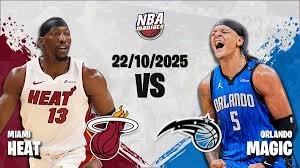
When it comes to exciting matchups in the NBA, few games capture Florida’s basketball energy quite like the clash between the Miami Heat and the Orlando Magic. Fans, analysts, and fantasy basketball players constantly search for miami-heat-vs-orlando-magic-match-player-stats to understand who dominated the floor, which players stepped up under pressure, and how the numbers shaped the outcome of the game.
In this in-depth article, we’ll explore the most important insights from recent meetings, focusing heavily on miami-heat-vs-orlando-magic-match-player-stats, individual performances, team comparisons, and what these stats mean moving forward.
Game Overview and Team Performance
Every time these two Florida rivals meet, intensity is guaranteed. The battle isn’t just about bragging rights; it’s about playoff positioning, team development, and showcasing young and veteran talent. Looking closely at miami-heat-vs-orlando-magic-match-player-stats, we can identify clear patterns in scoring distribution, defensive efficiency, and bench contributions.
Miami often relies on disciplined defense and half-court execution, while Orlando tends to push tempo with youthful energy and athleticism. When reviewing miami-heat-vs-orlando-magic-match-player-stats, one of the first things that stands out is the contrast in shooting percentages and transition points.
Star Performers: Miami Heat
The Heat’s identity has long been built around toughness and leadership. In recent games, key contributions came from stars like Jimmy Butler and Bam Adebayo.
Jimmy Butler’s Impact
Butler’s stat line frequently leads the conversation in miami-heat-vs-orlando-magic-match-player-stats. Whether it’s scoring 25+ points, grabbing crucial rebounds, or delivering clutch assists in the fourth quarter, Butler’s all-around presence is reflected directly in the numbers. His free-throw attempts also play a major role, often swinging momentum in tight contests.
Bam Adebayo’s Two-Way Dominance
Adebayo’s contributions in the paint are another major factor in miami-heat-vs-orlando-magic-match-player-stats. He consistently records double-doubles, combining efficient scoring with strong rebounding totals. Defensively, his blocks and ability to switch onto guards significantly affect Orlando’s offensive flow.
When analyzing miami-heat-vs-orlando-magic-match-player-stats, Miami’s efficiency inside the arc often correlates with Adebayo’s performance.
Orlando Magic’s Rising Stars
Orlando’s rebuild has produced exciting young talent, and that is clearly visible in miami-heat-vs-orlando-magic-match-player-stats. Players like Paolo Banchero and Franz Wagner frequently headline the box score.
Paolo Banchero’s Scoring Ability
Banchero’s scoring versatility is a consistent highlight in miami-heat-vs-orlando-magic-match-player-stats. Whether attacking off the dribble, hitting mid-range jumpers, or drawing fouls, he often leads Orlando in points. His usage rate is typically high, and his performance largely determines the Magic’s offensive output.
Franz Wagner’s Efficiency
Wagner’s efficient shooting percentages and smart off-ball movement are equally important. In several breakdowns of miami-heat-vs-orlando-magic-match-player-stats, Wagner stands out for his balanced stat lines—contributing points, assists, and rebounds without forcing shots.
Key Statistical Categories That Decide the Game
Beyond individual star numbers, certain statistical categories consistently determine the outcome. A deep dive into miami-heat-vs-orlando-magic-match-player-stats reveals the following deciding factors:
1. Three-Point Shooting
Whichever team shoots better from beyond the arc usually gains a critical advantage. Miami’s perimeter shooters can stretch the floor, but Orlando’s young roster has improved significantly in spacing and outside accuracy.
2. Rebounding Battle
Rebounding margins in miami-heat-vs-orlando-magic-match-player-stats often tell the true story. Second-chance points can shift momentum quickly. When Orlando dominates offensive boards, they generate extra scoring opportunities that keep them competitive.
3. Turnovers and Fast Break Points
Turnovers are another defining element. Miami’s defensive schemes often force mistakes, while Orlando thrives on converting steals into transition buckets. Reviewing miami-heat-vs-orlando-magic-match-player-stats, fast break efficiency frequently separates the winner from the loser.
Bench Contributions and Role Players
While stars grab headlines, bench performance plays a major role in the final outcome. In multiple editions of miami-heat-vs-orlando-magic-match-player-stats, role players have produced unexpected scoring bursts.
Miami’s second unit often contributes crucial three-point shots and defensive stops. Meanwhile, Orlando’s bench adds athleticism and scoring depth, sometimes swinging the game during non-starter minutes.
When analyzing miami-heat-vs-orlando-magic-match-player-stats, it’s important to look beyond points and evaluate plus-minus ratings, bench scoring totals, and defensive matchups.
Defensive Matchups and Adjustments
Defense remains central to both teams’ identities. Miami emphasizes switching and physical perimeter defense, while Orlando leverages length and shot-blocking ability.
In detailed reviews of miami-heat-vs-orlando-magic-match-player-stats, blocks, steals, and contested shot percentages provide deeper insight than raw scoring numbers. Defensive rebounds also prevent second opportunities, which is critical in close games.
Miami’s defensive rotations often limit Orlando’s three-point attempts, while Orlando counters by attacking the rim aggressively. These strategic adjustments are clearly reflected in the evolving miami-heat-vs-orlando-magic-match-player-stats from quarter to quarter.
Comparing Offensive Efficiency
Advanced metrics further enhance understanding of miami-heat-vs-orlando-magic-match-player-stats. Offensive rating, true shooting percentage, and assist-to-turnover ratios help explain why one team gains momentum.
Miami tends to execute structured offensive sets, leading to higher assist numbers when ball movement flows effectively. Orlando’s offensive efficiency often depends on isolation scoring and pick-and-roll execution.
Breaking down miami-heat-vs-orlando-magic-match-player-stats through advanced analytics reveals how spacing, tempo, and shot selection influence results.
What These Stats Mean for Future Matchups
Looking ahead, trends within miami-heat-vs-orlando-magic-match-player-stats suggest that games will remain competitive. Orlando’s young core continues to develop, narrowing the experience gap. Miami’s veteran leadership, however, provides consistency in high-pressure moments.
If Orlando improves late-game execution and reduces turnovers, future miami-heat-vs-orlando-magic-match-player-stats may tilt more evenly. Conversely, if Miami maintains defensive discipline and efficient half-court scoring, they’ll likely continue controlling key matchups.
Final Thoughts
The rivalry between the Miami Heat and Orlando Magic continues to grow stronger each season. A careful review of miami-heat-vs-orlando-magic-match-player-stats offers more than just numbers—it reveals team identity, player growth, coaching strategy, and momentum shifts.
From Jimmy Butler’s leadership to Paolo Banchero’s scoring brilliance, the matchup consistently delivers compelling storylines backed by meaningful statistics. By examining miami-heat-vs-orlando-magic-match-player-stats, fans gain a deeper appreciation for how individual performances connect to overall team success.
As both franchises push toward playoff ambitions, expect future games to produce even more impressive stat lines, breakout performances, and thrilling finishes. And as always, the detailed miami-heat-vs-orlando-magic-match-player-stats will remain the ultimate guide to understanding who truly owned the court.